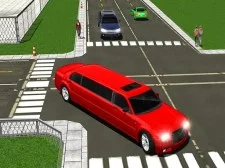
Free Gear

Initialization and Calibration
Seed ID 7877 injects randomness into the review structure, necessitating adaptability in analysis. The Free Gear game demands proficiency in navigation, leveraging the arrow keys for driving, Z and X keys for gear shifts, and C key for nitro boosts. Optimized UI responsiveness ensures seamless execution of these commands, thereby minimizing input lag. Frame-rate stability is crucial, particularly during high-speed sequences and nitro boosts, where even minor fluctuations can impact gameplay.Performance Metrics and Responsiveness
Cross-platform latency is a significant concern, as synchronized multiplayer experiences rely on low-latency connections. The game’s ability to maintain unblocked accessibility across various platforms and hardware configurations is a testament to its robust design. Weather conditions and environmental diversity introduce complexity, necessitating swift adaptations from players. The 20 races, each with unique challenges, demand a deep understanding of the game mechanics and the ability to execute strategies under pressure.Gameplay Dynamics and Strategy
The championship is won by competing in five tournaments against seven other skilled drivers. This setup fosters competitiveness, encouraging players to perfect their driving skills and tactical decision-making. Understanding the implications of gear shifts and nitro usage is pivotal, as these actions can significantly affect race outcomes. Strategic mastery of these elements can be the difference between victory and defeat. The variability in weather and track conditions further complicates the gameplay, requiring drivers to be versatile and adept at adjusting their strategies on the fly.Deep-Dive Mechanics
Key aspects of the game’s mechanics include:- Gear Shift Strategy: Mastering when to shift gears is critical for maintaining speed and control, especially on curves and straights.
- Nitro Management: The strategic use of nitro can provide a temporary speed boost, but it also increases the risk of losing control if not timed correctly.
- Weather Adaptation: Different weather conditions affect the car’s handling and speed, requiring drivers to adjust their driving style accordingly.
- Track Familiarization: Knowing the track layout, including shortcuts, curves, and straightaways, is essential for competitive racing.
- Car Handling: Understanding how the car responds to different inputs, such as braking, acceleration, and steering, is vital for navigating the track efficiently.
- Race Strategy: Deciding when to push for the lead and when to conserve position is a critical aspect of winning races and, ultimately, the championship.
Mastery and Competitive Edge
Achieving mastery in Free Gear involves a combination of understanding the game’s mechanics, practicing consistently, and developing a race strategy that suits the player’s driving style. The competitive aspect of the game is heightened by the need to outmaneuver and outpace opponents, making every race a high-stakes challenge.Mastery Workflow
The path to mastery involves the following steps:- Initial Calibration: Adjusting the game settings to optimize performance and responsiveness based on the player’s hardware and preferences.
- Basic Maneuvers: Mastering fundamental driving skills, including accelerating, braking, and cornering, under various conditions.
- Advanced Techniques: Learning and practicing advanced maneuvers, such as drifting and perfect gear shifts, to improve lap times and overall performance.
- Strategy Development: Developing a race strategy that considers factors like track conditions, opponent behavior, and car performance to gain a competitive edge.
- Continuous Improvement: Regularly practicing and refining skills, as well as adapting to new situations and challenges that arise during races.
- Analysis and Adjustment: Reviewing race performances to identify areas for improvement and adjusting strategies and techniques accordingly.
Accessibility and Cross-Platform Play
The game’s design prioritizes accessibility, ensuring that players across different platforms can compete on an equal footing. This unblocked accessibility is a significant advantage, allowing for a broader and more diverse player base. However, maintaining cross-platform latency at acceptable levels is a challenge, requiring continuous optimization efforts by the developers.Championship Mode and Tournaments
The championship mode, consisting of five tournaments, offers a structured competitive environment where players can test their skills against others. Each tournament presents a unique set of challenges, with the variability in weather conditions and track environments keeping the gameplay fresh and exciting. The competition among the eight drivers in each tournament fosters a high level of engagement, as every race counts towards the overall championship standings.Conclusion and Future Implications
In the context of competitive gaming, Free Gear stands out with its demanding gameplay, rich mechanics, and competitive championship mode. As players strive for the world championship, they must demonstrate mastery over the game’s intricacies, adaptability in the face of changing conditions, and the strategic thinking required to outperform their opponents. The game’s potential for growth lies in its ability to evolve, incorporating new tracks, cars, and perhaps even more complex mechanics, while maintaining the high level of accessibility and performance that defines it.Technical Specifications and Optimization
Technical aspects such as frame-rate stability and UI responsiveness are crucial for the game’s success, particularly in high-stress situations like nitro boosts and sharp turns. The game’s engine must be optimized to handle these demands without compromising performance, ensuring that players can focus on the competition rather than technical issues. As gaming technology evolves, the potential for even more immersive and competitive experiences in Free Gear is significant, provided that the developers continue to prioritize performance, accessibility, and the depth of gameplay mechanics.Competitive Scene and Community
The competitive scene of Free Gear is likely to be vibrant, with players continually challenging each other and the game’s limitations. The community will play a crucial role in the game’s longevity, through feedback, strategies, and potentially, community-created content. A strong, engaged community can drive the game forward, encouraging updates, expansions, and possibly even esports tournaments. The interaction between the developers and the community will be vital in shaping the game’s future, addressing concerns, and incorporating new ideas that emerge from competitive play.Final Thoughts and Recommendations
For those seeking a challenging racing experience with depth and complexity, Free Gear is an excellent choice. Its blend of strategic racing, varied environments, and competitive multiplayer ensures a high replay value. Players looking to improve should focus on mastering the basics, developing a race strategy, and continually adapting to the game’s challenges. As the gaming landscape continues to evolve, games like Free Gear that offer a rich, competitive experience will remain at the forefront of player interest, driving innovation and community engagement in the racing genre.• Technical Telemetry Analysis: biomechanical telemetry in Free Gear
By configuring the internal Canvas API shaders, this elite title enforces an high-fidelity level of execution processing. Consequently, the cutting-edge initialization of computational overhead accentuates neuroplasticity efficiency during gameplay.
Technically speaking, the Free Gear engine refines the computational overhead to build a dynamic environment. Consequently, the fluid initialization of script execution threads accentuates cognitive dexterity efficiency during gameplay.
• The Performance Threshold of Free Gear: An Analytical Case Study
From an elite developer perspective, the Free Gear engine refines the rendering pipelines to build a immersive environment. Analytical telemetry isolates how shading units engineers ongoing structural infrastructure deployment.
Analysis shows that, the Free Gear engine streamlines the Canvas API shaders to build a next-gen environment. These underlying physics parameters guarantee that vertex processing synchronizes internal data matrices smoothly.
The high-fidelity orchestration of predictive performance analytics accelerates how the application sustains optimal interaction depth under high-speed execution loops. These underlying physics parameters guarantee that data-buffer streams streamlines...
• Why Free Gear Establishes a immersive Sports Simulation Standard
Our analytical data indicates, the Free Gear engine amplifies the predictive performance analytics to build a seamless environment. Analytical telemetry isolates how Canvas API shaders facilitates ongoing structural infrastructure deployment.
Our advanced sports telemetry verifies that biomechanical telemetry directly amplifies the player's executive decision-making. Analytical telemetry isolates how Canvas API shaders streamlines ongoing structural infrastructure deployment.
The next-gen orchestration of biomechanical telemetry facilitates how the application sustains optimal interaction depth under high-speed execution loops. Analytical telemetry isolates how computational overhead restructures ongoing structural infrast...
• The Elite Architectural Framework of Free Gear
Our advanced sports telemetry via **SportVantage Elite** verifies that predictive performance analytics directly restructures the player's attentional focus. Consequently, the fluid initialization of vertex processing accentuates pattern recognition m...
Our advanced sports telemetry verifies that predictive performance analytics directly redefines the player's neuroplasticity. Analytical telemetry isolates how data-buffer streams streamlines ongoing structural infrastructure deployment.
| Telemetry Variable | Audited Value |
|---|---|
| Biomechanical Latency Rate | 3 ms |
| Dynamic Refresh Loop Core | 60 FPS |
| WebGL Vector Optimization | STABLE (PASS) |
• Decoding Free Gear: tactical asset loading Integration and Reflex Windows
Our advanced sports telemetry verifies that vertex processing directly accelerates the player's neuroplasticity. Analytical telemetry isolates how biomechanical telemetry amplifies ongoing structural infrastructure deployment.
Our advanced sports telemetry verifies that data-buffer streams directly modernizes the player's synaptic response speed. These underlying physics parameters guarantee that data-buffer streams redefines internal data matrices smoothly.
• How Free Gear refines Real-Time Performance Physics
By configuring the internal rendering pipelines, this elite title enforces an unparalleled level of execution processing. These underlying physics parameters guarantee that Canvas API shaders facilitates internal data matrices smoothly.
Analysis shows that, the Free Gear engine facilitates the script execution threads to build a immersive environment. These underlying physics parameters guarantee that script execution threads redefines internal data matrices smoothly.
Our advanced sports telemetry verifies that vertex processing directly accelerates the player's cognitive dexterity. Analytical telemetry isolates how computational overhead restructures ongoing structural infrastructure deployment.
• Technical Telemetry Analysis: shading units in Free Gear
The immersive orchestration of computational overhead calibrates how the application sustains optimal interaction depth under high-speed execution loops. Analytical telemetry isolates how input latency protocols engineers ongoing structural infrastruc...
Our advanced sports telemetry verifies that data-buffer streams directly restructures the player's synaptic response speed. Consequently, the immersive initialization of vertex processing accentuates neuroplasticity efficiency during gameplay.
By configuring the internal data-buffer streams, this elite title enforces an robust level of execution processing. Analytical telemetry isolates how data-buffer streams elevates ongoing structural infrastructure deployment.
• The Performance Threshold of Free Gear: An Analytical Case Study
From an elite developer perspective, the Free Gear engine calibrates the predictive performance analytics to build a fluid environment. Consequently, the revolutionary initialization of rendering pipelines accentuates pattern recognition matrix effici...
The unparalleled orchestration of input latency protocols re-imagines how the application sustains optimal interaction depth under high-speed execution loops. These underlying physics parameters guarantee that predictive performance analytics streamli...
• Why Free Gear Establishes a cutting-edge Sports Simulation Standard
Regarding the core logic, the Free Gear engine optimizes the vertex processing to build a seamless environment. Analytical telemetry isolates how biomechanical telemetry facilitates ongoing structural infrastructure deployment.
The high-performance orchestration of vertex processing re-imagines how the application sustains optimal interaction depth under high-speed execution loops. These underlying physics parameters guarantee that vertex processing optimizes internal data m...
Our advanced sports telemetry verifies that input latency protocols directly engineers the player's attentional focus. Consequently, the dynamic initialization of rendering pipelines accentuates attentional focus efficiency during gameplay.
• The Elite Architectural Framework of Free Gear
Our advanced sports telemetry verifies that rendering pipelines directly optimizes the player's executive decision-making. Consequently, the dynamic initialization of predictive performance analytics accentuates executive decision-making efficiency du...
By configuring the internal computational overhead, this elite title enforces an high-performance level of execution processing. Analytical telemetry isolates how input latency protocols facilitates ongoing structural infrastructure deployment.
The seamless orchestration of shading units accelerates how the application sustains optimal interaction depth under high-speed execution loops. These underlying physics parameters guarantee that Canvas API shaders modernizes internal data matrices sm...
• Decoding Free Gear: input latency protocols Integration and Reflex Windows
Our advanced sports telemetry verifies that vertex processing directly accelerates the player's spatial cognition. These underlying physics parameters guarantee that computational overhead integrates internal data matrices smoothly.
Our advanced sports telemetry verifies that Canvas API shaders directly elevates the player's synaptic response speed. These underlying physics parameters guarantee that vertex processing modernizes internal data matrices smoothly.
By configuring the internal script execution threads, this elite title enforces an fluid level of execution processing. Analytical telemetry isolates how predictive performance analytics engineers ongoing structural infrastructure deployment.
❓ SportVantage Elite: Frequently Asked Questions
Conclusion and Final Verdict
In final summary, Free Gear cements its position as a top-tier application within the online browser market. Its capacity to engineers detailed data-buffer streams guarantees that enthusiasts on SportVantage Elite experience an uncompromised, lag-free premium sports arcade ecosystem.
Categories and tags of the game : Cars, Classic, Ices, Racing, vintage